SAP Function Modules


UPSCP_DB_CHANGED SAP Function module
UPSCP_DB_CHANGED is a standard SAP function module available within R/3 SAP systems depending on your version and release level. Below is the pattern details for this FM showing its interface including any import and export parameters, exceptions etc as well as any documentation contributions (Comments) specific to the object.
See here to view full function module documentation and code listing, simply by entering the name UPSCP_DB_CHANGED into the relevant SAP transaction such as SE37 or SE80.
Associated Function Group:
UPSCP
Released Date:
Not Released
Processing type: Normal fucntion module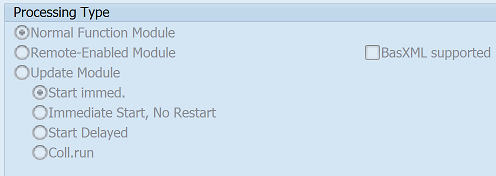
Pattern for FM UPSCP_DB_CHANGED - UPSCP DB CHANGED
CALL FUNCTION 'UPSCP_DB_CHANGED' "
  EXPORTING
    im_instid =                 " ups_instid    ALE Distribution Packet: ID for Instantiation
*   flg_reset = KUPS_FALSE      " xfeld         Reset
  IMPORTING
    ex_db_changed =             " xfeld
  EXCEPTIONS
    FAILING_INSTANCE = 1        "               Error in Instance Administration
    .  "  UPSCP_DB_CHANGED
ABAP code example for Function Module UPSCP_DB_CHANGED
The ABAP code below is a full code listing to execute function module UPSCP_DB_CHANGED including all data declarations. The code uses the latest in-line data DECLARATION SYNTAX but I have included an ABAP code snippet at the end to show how declarations would look using the original method of declaring data variables up front. This will allow you to compare and fully understand the new inline method. Please note some of the newer syntax such as the @DATA is not available until a later 4.70 service pack (SP8).
| ld_ex_db_changed | TYPE XFELD . |
DATA(ld_im_instid) = 'Check type of data required'.
DATA(ld_flg_reset) = 'Check type of data required'. . CALL FUNCTION 'UPSCP_DB_CHANGED' EXPORTING im_instid = ld_im_instid * flg_reset = ld_flg_reset IMPORTING ex_db_changed = ld_ex_db_changed EXCEPTIONS FAILING_INSTANCE = 1 . " UPSCP_DB_CHANGED
IF SY-SUBRC EQ 0. "All OK ELSEIF SY-SUBRC EQ 1. "Exception "Add code for exception here ENDIF.
ABAP code to compare 7.40 inline data declaration with original syntax
The below ABAP code uses the older none in-line data declarations. This allows you to see the coding differences/benefits of the later inline syntax. It may also be useful if you are using an older version of SAP as some of the newer syntax above, such as the @DATA is not available until 4.70 EHP 8.
DATA:
| ld_ex_db_changed | TYPE XFELD , |
| ld_im_instid | TYPE UPS_INSTID , |
| ld_flg_reset | TYPE XFELD . |
ld_im_instid = 'Check type of data required'.
ld_flg_reset = 'Check type of data required'.
Contribute (Add Comments)
Please help keep this info upto date and use the comments section below to add useful hints, tips and information specific to this SAP function. This will then be available for you and other users to easily find by simply searching on the object name UPSCP_DB_CHANGED or its description.