SAP SWK_WI_BACK Function Module for Plugin module to repalce a work item
SWK_WI_BACK is a standard swk wi back SAP function module available within SAP R/3 or S/4 Hana systems, depending on your version and release level. It is used for Plugin module to repalce a work item processing and below is the pattern details for this FM, showing its interface including any import and export parameters, exceptions etc. there is also a full "cut and paste" ABAP pattern code example, along with implementation ABAP coding, documentation and contribution comments specific to this or related objects.
See here to view full function module documentation and code listing for swk wi back FM, simply by entering the name SWK_WI_BACK into the relevant SAP transaction such as SE37 or SE38.
Function Group: SWK3
Program Name: SAPLSWK3
Main Program: SAPLSWK3
Appliation area: S
Release date: N/A
Mode(Normal, Remote etc): Remote-Enabled
Update:
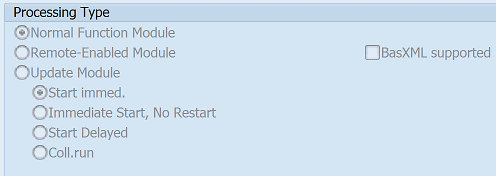
Function SWK_WI_BACK pattern details
In-order to call this FM within your sap programs, simply using the below ABAP pattern details to trigger the function call...or see the full ABAP code listing at the end of this article. You can simply cut and paste this code into your ABAP progrom as it is, including variable declarations.CALL FUNCTION 'SWK_WI_BACK'"Plugin module to repalce a work item.
EXPORTING
IM_WIID = "
* IM_USER = SY-UNAME "
* IM_LANGU = SY-LANGU "
IMPORTING
E_MESSAGE = "
E_RETCODE = "
IMPORTING Parameters details for SWK_WI_BACK
IM_WIID -
Data type: SWWWIHEAD-WI_IDOptional: No
Call by Reference: No ( called with pass by value option)
IM_USER -
Data type: SY-UNAMEDefault: SY-UNAME
Optional: Yes
Call by Reference: No ( called with pass by value option)
IM_LANGU -
Data type: SY-LANGUDefault: SY-LANGU
Optional: Yes
Call by Reference: No ( called with pass by value option)
EXPORTING Parameters details for SWK_WI_BACK
E_MESSAGE -
Data type: SWK_MSG_S-TEXTOptional: No
Call by Reference: No ( called with pass by value option)
E_RETCODE -
Data type: SWK_MSG_S-CODEOptional: No
Call by Reference: No ( called with pass by value option)
Copy and paste ABAP code example for SWK_WI_BACK Function Module
The ABAP code below is a full code listing to execute function module POPUP_TO_CONFIRM including all data declarations. The code uses the original data declarations rather than the latest in-line data DECLARATION SYNTAX but I have included an ABAP code snippet at the end to show how declarations would look using the newer method of declaring data variables on the fly. This will allow you to compare and fully understand the new inline method. Please note some of the newer syntax such as the @DATA is not available until a later 4.70 service pack (SP8), which i why i have stuck to the origianl for this example.| DATA: | ||||
| lv_im_wiid | TYPE SWWWIHEAD-WI_ID, " | |||
| lv_e_message | TYPE SWK_MSG_S-TEXT, " | |||
| lv_im_user | TYPE SY-UNAME, " SY-UNAME | |||
| lv_e_retcode | TYPE SWK_MSG_S-CODE, " | |||
| lv_im_langu | TYPE SY-LANGU. " SY-LANGU |
| CALL FUNCTION 'SWK_WI_BACK' "Plugin module to repalce a work item |
| EXPORTING | ||
| IM_WIID | = lv_im_wiid | |
| IM_USER | = lv_im_user | |
| IM_LANGU | = lv_im_langu | |
| IMPORTING | ||
| E_MESSAGE | = lv_e_message | |
| E_RETCODE | = lv_e_retcode | |
| . " SWK_WI_BACK | ||
ABAP code using 7.40 inline data declarations to call FM SWK_WI_BACK
The below ABAP code uses the newer in-line data declarations. This allows you to see the coding differences/benefits of the later inline syntax. Please note some of the newer syntax below, such as the @DATA is not available until 4.70 EHP 8.| "SELECT single WI_ID FROM SWWWIHEAD INTO @DATA(ld_im_wiid). | ||||
| "SELECT single TEXT FROM SWK_MSG_S INTO @DATA(ld_e_message). | ||||
| "SELECT single UNAME FROM SY INTO @DATA(ld_im_user). | ||||
| DATA(ld_im_user) | = SY-UNAME. | |||
| "SELECT single CODE FROM SWK_MSG_S INTO @DATA(ld_e_retcode). | ||||
| "SELECT single LANGU FROM SY INTO @DATA(ld_im_langu). | ||||
| DATA(ld_im_langu) | = SY-LANGU. | |||
Search for further information about these or an SAP related objects