SAP MASS_LFA1_CHANGE_DATA Function Module for Mass LFA1: FM Change Data application exit
MASS_LFA1_CHANGE_DATA is a standard mass lfa1 change data SAP function module available within SAP R/3 or S/4 Hana systems, depending on your version and release level. It is used for Mass LFA1: FM Change Data application exit processing and below is the pattern details for this FM, showing its interface including any import and export parameters, exceptions etc. there is also a full "cut and paste" ABAP pattern code example, along with implementation ABAP coding, documentation and contribution comments specific to this or related objects.
See here to view full function module documentation and code listing for mass lfa1 change data FM, simply by entering the name MASS_LFA1_CHANGE_DATA into the relevant SAP transaction such as SE37 or SE38.
Function Group: MASS_LFA1
Program Name: SAPLMASS_LFA1
Main Program: SAPLMASS_LFA1
Appliation area:
Release date: N/A
Mode(Normal, Remote etc): Normal Function Module
Update:
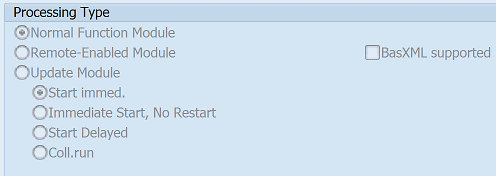
Function MASS_LFA1_CHANGE_DATA pattern details
In-order to call this FM within your sap programs, simply using the below ABAP pattern details to trigger the function call...or see the full ABAP code listing at the end of this article. You can simply cut and paste this code into your ABAP progrom as it is, including variable declarations.CALL FUNCTION 'MASS_LFA1_CHANGE_DATA'"Mass LFA1: FM Change Data application exit.
EXPORTING
SELDATA = "Table with Change Infos (Mass Maintenance)
* TESTMODE = "
IMPORTING
MSG = "
TABLES
* SLFA1 = "Vendor Master (General Section)
* SWYT3 = "Partner Functions
* SLFBW = "Vendor master record (withholding tax types) X
* SMASSVENDORKNVK = "Generated Table for View
* SLFAS = "Vendor master (VAT registration numbers general section)
* SLFB1 = "Vendor Master (Company Code)
* SLFB5 = "Vendor master (dunning data)
* SLFBK = "Vendor Master (Bank Details)
* SLFM1 = "Vendor master record purchasing organization data
* SLFM2 = "Vendor Master Record: Purchasing Data
* SWYT1 = "Vendor Subrange
* SWYT1T = "Vendor Sub-Range Description
IMPORTING Parameters details for MASS_LFA1_CHANGE_DATA
SELDATA - Table with Change Infos (Mass Maintenance)
Data type: MASS_TABDATAOptional: No
Call by Reference: No ( called with pass by value option)
TESTMODE -
Data type:Optional: Yes
Call by Reference: No ( called with pass by value option)
EXPORTING Parameters details for MASS_LFA1_CHANGE_DATA
MSG -
Data type: MASS_MSGSOptional: No
Call by Reference: No ( called with pass by value option)
TABLES Parameters details for MASS_LFA1_CHANGE_DATA
SLFA1 - Vendor Master (General Section)
Data type: LFA1Optional: Yes
Call by Reference: Yes
SWYT3 - Partner Functions
Data type: WYT3Optional: Yes
Call by Reference: Yes
SLFBW - Vendor master record (withholding tax types) X
Data type: LFBWOptional: Yes
Call by Reference: Yes
SMASSVENDORKNVK - Generated Table for View
Data type: MASSVENDORKNVKOptional: Yes
Call by Reference: Yes
SLFAS - Vendor master (VAT registration numbers general section)
Data type: LFASOptional: Yes
Call by Reference: Yes
SLFB1 - Vendor Master (Company Code)
Data type: LFB1Optional: Yes
Call by Reference: Yes
SLFB5 - Vendor master (dunning data)
Data type: LFB5Optional: Yes
Call by Reference: Yes
SLFBK - Vendor Master (Bank Details)
Data type: LFBKOptional: Yes
Call by Reference: Yes
SLFM1 - Vendor master record purchasing organization data
Data type: LFM1Optional: Yes
Call by Reference: Yes
SLFM2 - Vendor Master Record: Purchasing Data
Data type: LFM2Optional: Yes
Call by Reference: Yes
SWYT1 - Vendor Subrange
Data type: WYT1Optional: Yes
Call by Reference: Yes
SWYT1T - Vendor Sub-Range Description
Data type: WYT1TOptional: Yes
Call by Reference: Yes
Copy and paste ABAP code example for MASS_LFA1_CHANGE_DATA Function Module
The ABAP code below is a full code listing to execute function module POPUP_TO_CONFIRM including all data declarations. The code uses the original data declarations rather than the latest in-line data DECLARATION SYNTAX but I have included an ABAP code snippet at the end to show how declarations would look using the newer method of declaring data variables on the fly. This will allow you to compare and fully understand the new inline method. Please note some of the newer syntax such as the @DATA is not available until a later 4.70 service pack (SP8), which i why i have stuck to the origianl for this example.| DATA: | ||||
| lv_msg | TYPE MASS_MSGS, " | |||
| lt_slfa1 | TYPE STANDARD TABLE OF LFA1, " | |||
| lv_seldata | TYPE MASS_TABDATA, " | |||
| lt_swyt3 | TYPE STANDARD TABLE OF WYT3, " | |||
| lt_slfbw | TYPE STANDARD TABLE OF LFBW, " | |||
| lt_smassvendorknvk | TYPE STANDARD TABLE OF MASSVENDORKNVK, " | |||
| lt_slfas | TYPE STANDARD TABLE OF LFAS, " | |||
| lv_testmode | TYPE LFAS, " | |||
| lt_slfb1 | TYPE STANDARD TABLE OF LFB1, " | |||
| lt_slfb5 | TYPE STANDARD TABLE OF LFB5, " | |||
| lt_slfbk | TYPE STANDARD TABLE OF LFBK, " | |||
| lt_slfm1 | TYPE STANDARD TABLE OF LFM1, " | |||
| lt_slfm2 | TYPE STANDARD TABLE OF LFM2, " | |||
| lt_swyt1 | TYPE STANDARD TABLE OF WYT1, " | |||
| lt_swyt1t | TYPE STANDARD TABLE OF WYT1T. " |
| CALL FUNCTION 'MASS_LFA1_CHANGE_DATA' "Mass LFA1: FM Change Data application exit |
| EXPORTING | ||
| SELDATA | = lv_seldata | |
| TESTMODE | = lv_testmode | |
| IMPORTING | ||
| MSG | = lv_msg | |
| TABLES | ||
| SLFA1 | = lt_slfa1 | |
| SWYT3 | = lt_swyt3 | |
| SLFBW | = lt_slfbw | |
| SMASSVENDORKNVK | = lt_smassvendorknvk | |
| SLFAS | = lt_slfas | |
| SLFB1 | = lt_slfb1 | |
| SLFB5 | = lt_slfb5 | |
| SLFBK | = lt_slfbk | |
| SLFM1 | = lt_slfm1 | |
| SLFM2 | = lt_slfm2 | |
| SWYT1 | = lt_swyt1 | |
| SWYT1T | = lt_swyt1t | |
| . " MASS_LFA1_CHANGE_DATA | ||
ABAP code using 7.40 inline data declarations to call FM MASS_LFA1_CHANGE_DATA
The below ABAP code uses the newer in-line data declarations. This allows you to see the coding differences/benefits of the later inline syntax. Please note some of the newer syntax below, such as the @DATA is not available until 4.70 EHP 8.Search for further information about these or an SAP related objects